Mon – Fri: 9:30–18.00 & Sat: 10:00–17:00
Price: Please contact us for the price.
Location: Athens Corinth–Cencheria Carapaca Thessalonica
Duration: 6 days
Explore the Footsteps of Paul in Greece: Athens, Corinth, passing through Berea, Thessaloniki, Philippi—a gospel journey, tracing every step. Discover Thousands of Years of Cultural Heritage: The Acropolis, Mycenae, and Delphi. Tour the ingenious natural wonder of the Sky City — Meteora, and admire its unique landscapes and historic sites.
Day 1 Athens
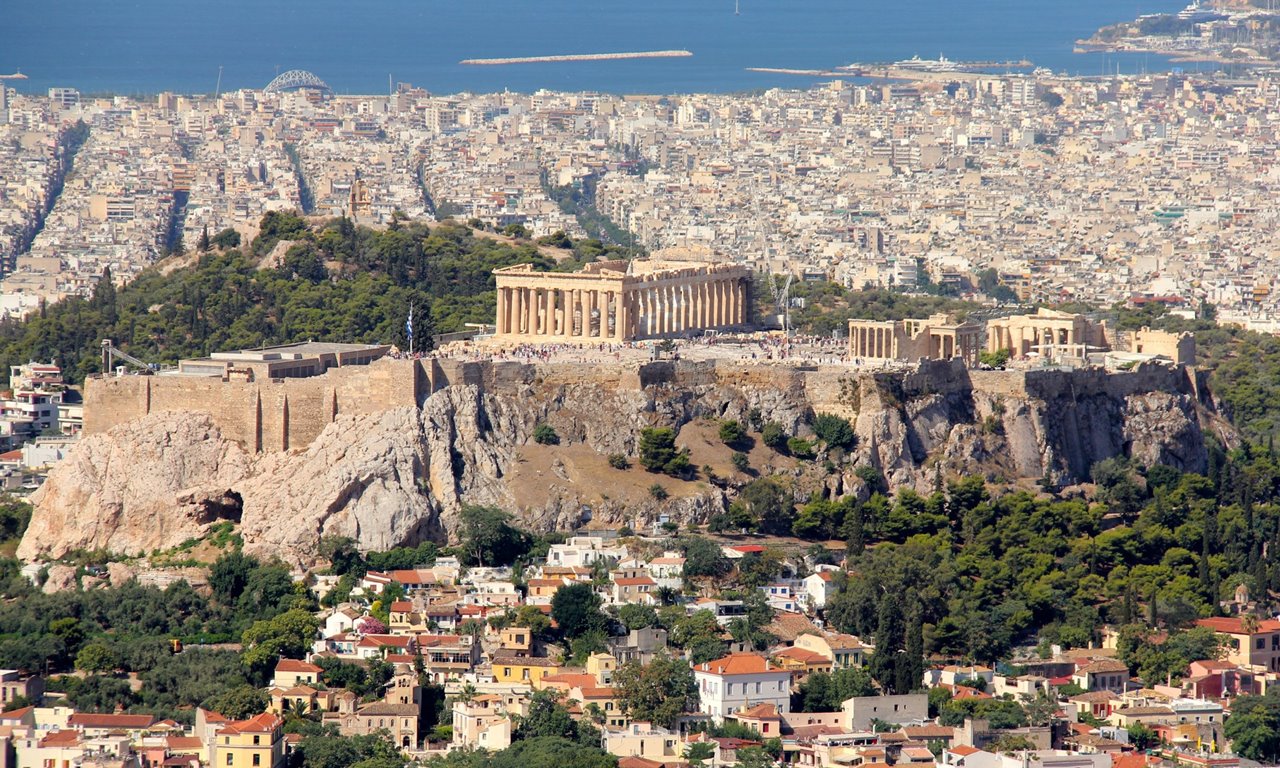
After being picked up at the airport by a professional tour guide and checking into the hotel, we will head to downtown Athens for sightseeing. When Paul arrived in Athens, he saw that the city was full of idols, and his heart was compelled to preach the gospel. We will visit one of the Seven Wonders of the Ancient World—the Acropolis of Athens, including the Odeon of Herodes Atticus, the Propylaea, the Temple of Athena Nike (also known as the Temple of Wingless Victory), the Parthenon, the Erechtheion, the Theater of Dionysus (also known as the Open-Air Theater of the God of Wine), and the Temple of Olympian Zeus. We will ascend to the Areopagus—where Paul preached to the Athenians. Then we will visit the Panathenaic Stadium, the site of the first modern Olympic Games held in 1896, also known as the Marble Stadium. We will also visit the Presidential Mansion, Constitution Square (Syntagma), and the exteriors of three major neoclassical buildings: the Academy of Sciences, the University of Athens, and the National Library. We will also visit the Parliament Building and the Tomb of the Unknown Soldier, where we will watch the traditional changing of the guard ceremony, which is rich in national character.
Day 2 Athens–Corinth –Cenae– Mycenae:
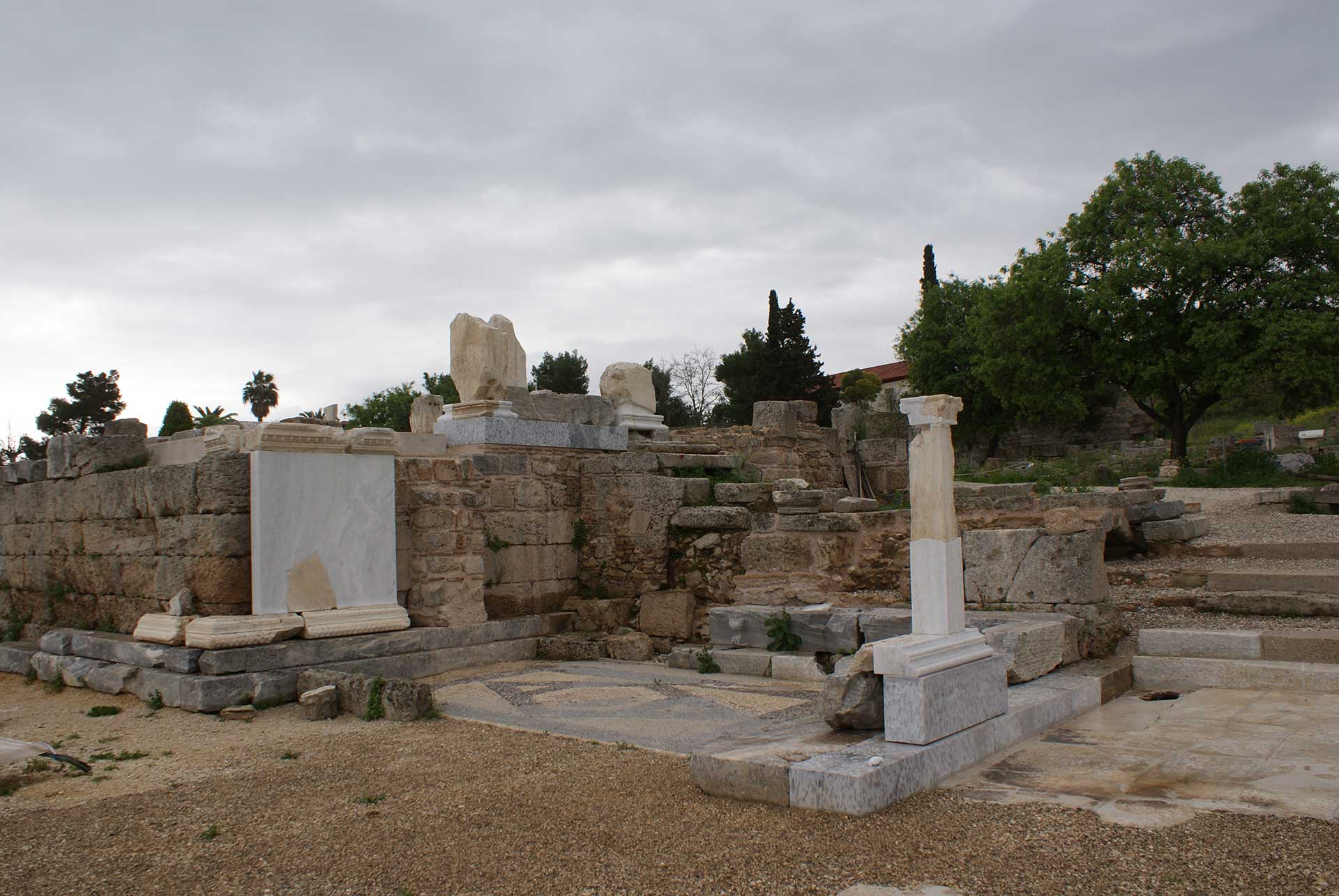
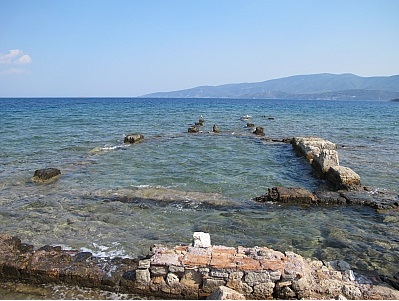
After breakfast in Athens, we will head to Corinth, making a brief stop for about 15 minutes at the Isthmus of Corinth. We will then visit the ruins of Ancient Corinth, including the Roman Agora and other historical sites. Afterward, we will proceed to Cenchreae—the port from which Paul once sailed to Syria—and finally travel to Mycenae, the birthplace of the Mycenaean civilization, which flourished around 2000 BC alongside the Trojan civilization.
Paul stayed in Corinth for a year and six months (Acts 18:11), making it the longest stop during his second missionary journey. At the time, Corinth was a prosperous metropolis with a booming economy, but it was also a city of moral decay. In such a lost and decadent place, preaching the gospel might have seemed nearly impossible. During his second missionary journey, after 18 months of ministry in Corinth, Paul and his coworkers prepared to return to the sending church to report on their work. Before sailing from the Aegean port of Corinth, they arrived in Cenchreae. Because Paul had fulfilled a vow, he had his hair cut there. Paul also mentions this place in Romans 16:1: “I commend to you our sister Phoebe, a deacon of the church in Cenchreae.” Cenchreae was a busy port city where ships came and went frequently, and it was known for its devotion to the sea god Poseidon. In such a superstitious, maritime city, it was remarkable to have a steadfast deacon like Phoebe, who was known for “being a great help to many.”
Day 3 Athens – Kalambaka:
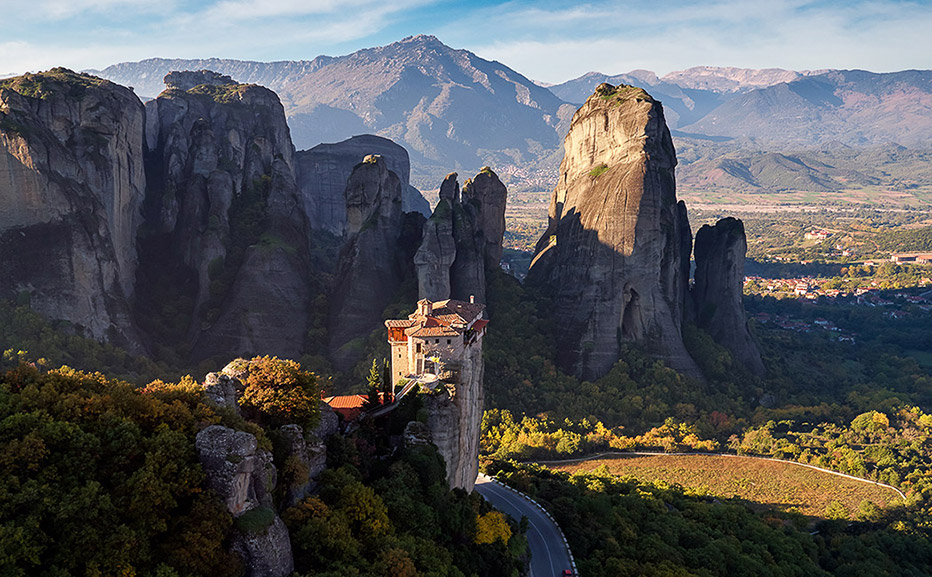
Visit the picturesque Meteora, famously known as the “Sky City,” and explore two of its medieval monasteries suspended in mid-air. These monasteries, built hundreds of years ago atop towering cliffs, are truly awe-inspiring.
The Meteora Monasteries are located in the Thessaly region of Greece, specifically in the municipality of Trikala, and refer to a group of monasteries in the area.
The Meteora Monasteries stand proudly atop massive rock formations. In 1988, the Meteora Monasteries were inscribed on the UNESCO World Heritage List, recognized for their exceptional cultural heritage. The monasteries have preserved ancient characteristics, including old icons, frescoes, and parchment scrolls, making them a treasure trove of historical artifacts. The towering, dark rock formations rise dramatically from the ground, standing like a forest of stone pillars, their unique landscape a masterpiece of nature. What makes Meteora truly special is the group of monasteries suspended atop these steep rocks, isolated and seemingly unreachable. These awe-inspiring monasteries, along with the challenging rock climbing and hiking trails, are why Meteora attracts so many visitors. The monks carved out secluded cells in these steep cliffs, living an ascetic and solitary life. Many of these ancien
Day 4: Meteora-Veria-Thessalonica:
After breakfast, we will continue our visit to the remaining monasteries. t caves where they once resided can still be seen on the rock faces today.
After lunch, we will drive to Veria (Berea). Today’s Veria is home to a small park dedicated to Paul, featuring a monument and images depicting his ministry. Finally, we will drive to modern-day Thessaloniki, where, after dinner, we will check into the hotel and rest.
Day 5 Thessaloniki–Amphipolis – Philippi – Neapolis:
Thessaloniki is the second-largest city in Greece, an important port city, a cultural center, and a transportation hub. During the Roman Empire, it was the capital of the Macedonia region. Paul visited Thessaloniki during his second missionary journey, preaching the gospel, and later returned during his third missionary journey to strengthen the faith of the disciples.
Amphipolis: Amphipolis is mentioned for the first and only time in the Bible in Acts 17:1. When Paul and Silas were on their second missionary journey, responding to the “Macedonian call,” they entered Europe and passed through this city on their way from Philippi to Thessaloniki. Amphipolis was also a military post of the Roman government along the Via Egnatia. The most famous archeological site in ancient Amphipolis is the “Lion of Amphipolis,” a stone lion sculpture dating back to the 2nd or 3rd century BC. It was likely erected to honor Laomedon, a close friend of Alexander the Great, who served as the governor of Syria.
Philippi: Paul first visited Philippi during his second missionary journey. At the time, there were only a few Jewish residents, so there was no synagogue, and the Sabbath gathering was held outside the city by the Gangitis River. There, Paul met a group of women and preached to them. One of them, Lydia, a seller of purple cloth, believed the message Paul preached, and she and her household were baptized (Acts 16:15a). Paul later accepted Lydia’s invitation to stay at her house (Acts 16:13-15). In the 6th century, the gospel bore much fruit in Philippi, and today, the remains of the ancient city include a church, the market square, a theater, baths, and possibly the place where Paul was imprisoned. We will also visit the small river where Paul baptized Lydia, with its gentle flowing waters and shaded trees.
Neapolis: The Neapolis mentioned in Acts 16:11 is modern Kavala, located in the northern part of the Aegean Sea, in Kavala Bay, named after the city. It is the second-largest city in northern Greece, the main port of Eastern Macedonia, and the capital of the Kavala Prefecture.
Day 6 Neapolis – Thessaloniki:
After breakfast, we will be accompanied by our tour guide to Thessaloniki Airport by bus and board our flight back home.